Tuesday, July 28, 2020

V_Woolfe's Lost Shipments (Esoteric Enterprises spells and grimoires)

"Whisper blows across a Colorado field that's dry as bones. V_Woolfe is sitting in a plastic lawn chair underneath the rusty clouds that crawl by, reading, at last with nothing on her mind. There's a black-suited man next to her, who stares at the clouds with mournful attention. The fire in a car that crashed into a boulder earlier flaps in the wind like a flag. Time has progressed past the twenty-four mark and now, every hour is apostasy. She is going to die in three hours. Never mind that, though. It's a good book."

Who's to say what becomes of people like V_Woolfe, who chew on the dark stringy hyphae of the mycelium that stretches across America. Smuggling and internet sales of occult literature was easier in Europe, she always held, but that's not really true. It's different. In America, the roads are longer. More stuff gets lost. Not stolen, but lost lost.

Here's some books that might have gotten lost in transit.

(These books contain both spells that are and aren't in the base game. The ones that aren't are listed at the end.)

Art by Nokse Mojo

The Suitcase from Berlin

"It never left the safe behind a dadaist painting in an upstate New York apartment, like it was supposed to. Now it's sitting there, waiting for a train that'll never come because the conductor is turned to insects and the engine was pawned." 

Thaumaturgy and Marx's Theory of Labour, by Sotiria Dimopoulos, 19th century. Greek.
Spells: Blood to Money, Trace Power, Speak With Engine

The Eastern Account, by Hans Mauer, 20th century. German.
Spells: Peephole, Remove Identity, Protection from Weapons

The Sunken Box

"It was thrown overboard just outside a California industrial harbour town. The paranoid smuggler was shot two days later, and the bay combed, but the metal box was never found. They had to shoot the smuggler again, then, on a stormy evening in the hotel bar. And then they had to run him over with their car while driving to Vegas."

Anchovie Shanties, by unknown, 19th century.
Spells: Delirium, Raise Fishes, Octopus Flesh

The Dig, and other Tales, by Reverend J. Asher, 20th century.
Spells: Ignore Stench, Travel By Night, Speak With Insects

The Empty Car

"The driver went for a piss besides the road at night and saw a light in the distance. He started walking towards it and never came back. Now it's just sort of standing in the desert, where nobody cares to remove it. A coyote lives under it, and sand on the wind has stripped off the majority of the paint."

House With a Pool, by Diana Perez, 21th century. Spanish.
Spells: Blood in the Water, Know Guilt, Paranoia

Kentucky Cannibal Witch-King, by John Saul, 21th century.
Spells: Dopethrone, Gun Mouth, Flay

The Crate in the Forest

"It's stamped with the sign of a shipping company, but the logo is barely visible on the weathered wood under filthy plastic tarp. The crate lies in a forestial crevice just south of the Canadian border, in a contorted metallic nest of the pickup it was being carried by. There are no roads for miles, all dense forest, no car tracks."

The Kalyagin Anthology, by Maksim Kalyagin, 21st century. Russian.
Spells: Speak Through Corpse, Invisibility, Tunnel

My Time in Oregon, by unknown, 21st century.
Spells: Inhabit Animal, Weather, Floating Eye


Art by Sergey Kolesov

SPELLS:


Blood to Money (rank 4, range touch, duration instantanous): You drain a living person of their energy and health, and it will convert itself into paper money, similar to what they could have made by the labour you've extracted from their body. The stronger the body, the bigger the wads of dollars. Curiously, Blood to Money is one of the few spells dependent on the state of the economy. The victim can Save against Magic to still be affected by the spell but make it not produce any money.

Trace Power (rank 3, range touch, duration instantaneous): By touching an item imbued with power or authority, either magical or mundane (a legislative document, a towering building, or even a plot of valuable land works just as well as a magical barrier), you can discover the identity of the holder(s) of its power. Can also be used on people to discover their employers. Anyone/anything that can do so has an opportunity to Save against Magic to resist the effect.

Speak with Engine: As Techspeak, but with machines that have an engine.

Peephole (rank 1, range touch, duration 1 minute per level): The caster makes appear a hole in a solid surface, and accordingly, somewhere on the surface of that same material (the concrete of a building, the soil of a plot of land, the caster, the metal of a crane, ...) another hole appears at a location of the caster's choosing. The caster can look through the hole and see out the other end, or put their ear to it and listen, but not both at the same time.

Remove Identity (rank 5, range touch, duration permanent): The caster targets an item or a person, and any written records, pictures and videos of them are erased. People notice this: they can tell there are suddenly blanks where a name, a description or a picture of a person should be. For one day per level, it remains impossible to create any permanent record of the target. Descriptors that do not name the target, like "My brother's hiking buddy" don't disappear. This spell takes longer to cast the more famous the target object or person is. When targeting an object, only reference to that object is erased, not to similar objects or objects of the same make, brand or appearance.

Delirium (rank 2, range 30ft, duration as long as caster remains intoxicated): The caster shares the effect of their intoxication with any creatures that can be affected by it within range. These creatures can Save against Poison to resist its effects.

Raise Fishes (rank 4, range 30ft, duration 1 minute per level): Around the caster, any body of water or device that produces water or accepts water, like a tap, a showerhead, a drain, a pump, a well, etc. begins to produce and expel dead and live fish and fleshy sea creatures. This tide of fish will quickly fill up indoor spaces, but decay more quickly than usual when the spell ends (though not instantly).

Ignore Stench (rank 1, range self or touch, duration 10 minutes per level): The caster can ignore any Saves required to be made, and other negative effects, that are brought about by overwhelming or disgusting smells.

Travel by Night (rank 3, range self or one vehicle, duration one nightly travel): So long as the sun is down and you remain in transit, a small burning flame persists in the air above your head or vehicle and your journey will be relatively unobstructed. All but the most severe weather will not affect you, weak creatures will not attack you and weak magic cannot affect you. Strong creatures or magic can Save against Magic to overcome this effect, but when they do you sense their approach.

Speak with Insects: As Speak with Animals, but allows the caster to speak with any insects rather than a specific type, but not with other animals.

Speak through Corpse (rank 2, range 1 mile per level., duration 1 minute per level): The caster can speak through the mouth/throat of a human corpse that they know the appearance of. If the caster knows of multiple corpses within the range, they can speak through them simultaneously. This spell can be cast to also hear what the corpse hears, but this limits the scope to one chosen corpse.

Tunnel (rank 5, range self, duration 1 minute per level): The caster becomes able to walk through dirt, rock and concrete without resistance, leaving a human-shaped tunnel. They do not fall through it, but can walk downwards in an incline to descend, like going down a hill. The caster cannot pass through metal.

Inhabit Animal (rank 4, range touch, duration 1 hour per level): The caster can inhabit the body of one mundane animal no larger than a tiger, crawling into them and effectively controlling their body. From the moment this happens the animal is by all means dead, but will still register as alive while you inhabit it. When leaving the animal, the caster tears out of it, even when the animal is much smaller than the caster.

Weather (rank 3, range one area, duration instantaneous): The caster learns with certainty the weather that will occur in a particular area, and can appeal to it as though persuading a person to change slightly, but not drastically. If it's already going to rain, you can persuade it to become a monsoon, but not if it would normally have been sunny.

Blood in the Water (rank 1, range self, duration 15 minutes per level): The caster becomes hyperaware of the scent of blood in the air and the water, allowing them to follow trail-like scents of those who have passed through the area while bleeding.

Gun Mouth (rank 2, range self, duration 1 round per level): The barrel of a heavy machine gun comes out of the caster's mouth, which they can use to attack (as assault rifle) for the duration of the spell, though the shaking of the gun rattles their head and makes their eyes look like googly ones when you shake them. The caster must make a Save vs Stun or be concussed when the spell ends.

Paranoia (rank 5,  range 10ft per level, duration instantaneous): Like with the Fear spell, chosen targets within the radius Save vs Magic, or irrationally believe that they are followed, observed, hunted or otherwise the target/under threat of an entity of the caster's specification. The spell will gently change their perception of reality to fall more in line with this belief. This latter effect, and any magical forcing of the belief caused by the spell, is considered a curse for the purposes of removing it. However, it may still leave lasting psychological effects even after the spell ends.


Saturday, July 18, 2020

Professor Vlinderkaai's Sempervivarium

"Ever since its dawn, the human race has tried its hand at defying death, and in a sense its efforts have grown ever more succesful. And yet, for all the years we have stolen from the reaper's bony clutches, little is different about how we live them. The back of grandmother still gives out, the joints of the old ironsmith still ache. In fact, our attempts at cheating that thing on the pale horse have only resulted in it cheating us in kind: those years we've won are naught but feeble embers at the end of our time, rather than the flames of youth we so desire.

Therefore my ventures in this life have been to combat not that blade that must swing when all is done, but that clock whose hand we may hold still, to never let ring its twilight hours."


-- Professor Dr. Joris Vlinderkaai, prologue to his first book

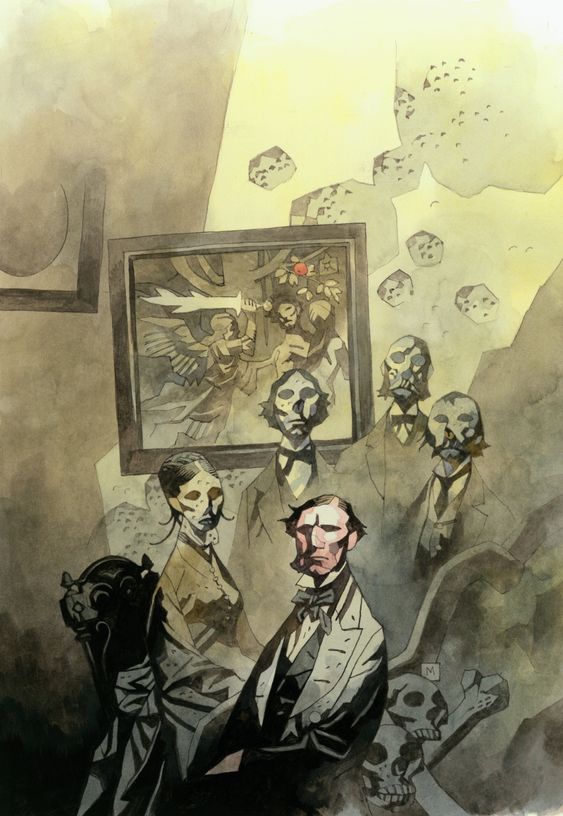
Dramatic as he was, professor Vlinderkaai nonetheless put his money where his mouth was and sank a great deal of resources into that dream of his: to find the cause, and by extension the cure, for ageing. To this end, he used his allowances from the University, and when that ran out, all of his family fortune to travel the world, collect extraordinary specimens, and perform bizarre experiments to further his understanding of the ageing process. These ventures found their heart in Vlinderkaai's base of operations during the latter half of his life: a great terraced house on Island Street, transformed over the years into a laboratory known to his neighbours as "That bespectacled madman's unholy petting zoo- bloody hell, the racket those monkeys make! And the constables just let him carry on!" and to his colleages at the University as the Sempervivarium.

On his sixtieth birthday, Dr. Joris Vlinderkaai disappears without a trace. When going to look for him in his Sempervivarium, the University staff finds it to be full of reality-defying monstrosities and the insane works of professor Vlinderkaai's obsession. They run out howling. Someone more stern or more expendable must delve into the laboratory instead.

If you're playing an alt-history type game, this outlandish abode would be located in Amsterdam. If not, then it can be in whatever early 20th-century city with a university you'd like it to be.

Art by Mike Mignola
THE ROOMS:

The Foyer (Entrance)

The Sempervivarium's foyer as you find it built in 19th-century colonial style, is dusty and the walls are covered in framed family portraits. They are all different families, and each frame has a piece of paper attached to them noting all of the members' ages, remarks on their diets, their blood types, and so on. It seems the whole hall functions as some sort of large scoring board. Next to the coffee table there is a Chinese vase containing ocean floor slib that houses a 300-year old talking clam named Ming. It seems to have memorised random fragments of conversation in the hallway, both yours and those of Vlinderkaai and his visitors. A set of bell jars containing increasingly worn skeletal knee joints are set on a drawer and a glass case with pinned flies whose wings have deteriorated is mounted on the wall.

Every time you enter a new room, roll a 1d6. If it's 1-3, you find random rooms repurposed into laboratories with jars of fruit flies, liquid medium full of tiny worms, mice in various states of dissection and preservation, bookcases, diagrams on the walls, and so on. In each of these you will encounter one Creature. If it's 4-6, you find one of the following rooms. Roll a d6 to know which. In them you have a 1 in 6 chance to encounter a Creature.

1 - The Okinawa Room:

A large greenhouse-like room that reproduces the setting of a Japanese rural village. It is populated exclusively by people over 100 years old. They eat very little, and will find it impolite if you eat excessively in front of them or take more than your small share. Unaware that they are living in a laboratory. When they find out they react as you would expect.

2 - The Mitochondric Room:

A room full of chemical apparatus and glass tanks with highly reactive oxygen mixtures. Getting into contact with them causes damage, mutations, and this. Tread very very carefully- the pipes of the apparatus are all quite leaky.

3 - The Early Room:

A room with beds and wheelchairs that house people with various afflicitons of fast ageing: children with wrinkled skin, arthritis and grey hair stare at you miserably. A baboon in a doctor's outfit feeds them pale beige pudding and tends to them as well as a baboon can.

4 - The Pygmy Room:

A room containing many animals, all of which are smaller versions of themselves. Small mice, small birds, small reptiles, etc. You feel like a giant in this room. All of the animals' cages have labels with their ages: they are far older than they should be for their species.

5 - The Monkey Room:

A bizarre cross between a cocktail bar and a surgeon's room. Many open cages hang from the ceiling. Full of baboons, doing baboon things. Will freak out if you look like a surgeon or approach the surgical equipment, leave you alone or serve you at the bar otherwise. Many of the bottles in the bar bear the label "extract," and most of the monkeys lack their usual testicles. Above the bar there is a portrait of a man with a moustache labeled "My Unfortunate Colleague" If you fall asleep in the Monkey Room, the moustachioed doctor character will come out of his portrait, scaring away all the baboons, and try to sew monkey balls into your body. When cut he turns back into portrait canvas.

6 - The Bristlecone Room:


Room dominated by a gnarled pale tree sitting in the middle of the room in a soil basin. It has been abducted from its usual place high up in the American rock mountains, is over 5000 years old, and would like to go back.

The Frozen Room:

You find this room after all previous rooms have been explored. It's Vlinderkaai's study, most of which is frozen over. In a big block of ice behind the desk sits the professor's body, curled up, desiccated and partially transformed into a tardigrade-like creature. Vlinderkaai's epilogue (see end of post) as well as his valuable unpublished research are on the desk, and the study contains many other valuable works on science, medicine, and the paranormal.


Art by Mike Mignola
THE CREATURES:

1 - The Elegancy:


A floating, translucent, featureless worm the size of a fat boa constrictor. Will attack using its mouth needle, and produce another 4 Elegancies when it kills a living creature roughly its own size by feeding. When under stress (when hurt, on fire, starved, etc) it will shrivel into a condensed version of itself the length of a forearm, which is extremely hard and durable. It will stay in this form until left alone. It floats through the air in a smooth wave-like pattern.

2 - The Melanogast:

An anthropomorphic fly in a dusty morning suit. It will eat mould off of rotting fruit, and is generally harmless and rather polite. It will be performing menial tasks in whatever room it is encountered in.

3 - Sugary Maike:

A woman called Maike made out of an odd, blubbery substance that smells like bread yeast. Her body contains tiny rings of braided fiber that accumulate the longer she exists. She will continuously produce new, toddler-sized Maikes that start anew with their ring accumulation and grow into adult Maikes. At a certain treshold, the rings become too much and the old Maike sags into a heap of blubber, vaguely retaining her bodily consistency. If you touch the rings, or an old Maike containing many of them, they transfer to your body and age you a year per second of rings sucked into you. The Room you encounter Maike in is already mostly covered in old Maikes, and overcrowded with young Maikes trying to get out.
The lifespan of a Maike is about ten minutes, during which she produces a Maike per minute.

4 - The Selection Shadow:

A shadow that is cast in the shape of a random animal, and moves along the room. When it covers you, roll a new mutation and age 10 years every turn it is on you. You cannot pass this mutation on to any offspring. Children and teenagers are not affected by the Shadow. The shadow is quick, but it can be outrun or kept at bay with light sources. It will actively chase you.

5 - The Disposable Body:

A dead man with an egg in his mouth. This egg is a chicken's egg that, when someone touches it, breaks and curses them to slowly form an egg in their body that will use up all their energy and nutrients. When complete the curse causes the victim to regurgitate the egg and die, ending in the same position as the found corpse.

6 - The Elephant Molar:

A large set of dentures made out of the teeth of an elephant, which will attack and chew on any person that it can reach, hopping around the room. It cannot be destroyed or damaged, but it can be detained, trapped, or otherwise prevented from attacking. However, it will try to chew through anything that imprisons it/prevents it from attacking people. The only way the Elephant Molar can die is when its teeth are all ground down from chewing. How long it will take it to reach this point is anyone's guess.


Art by Mike Mignola
THE TREASURES:

Every non-special Room has a 1 in 6 chance to contain a random Treasure. Any Treasures not encountered during the exploration of the Sempervivarium are found in the Frozen Room.

1 - The Book Between:

Professor Vlinderkaai has published three books on the phenomenon of age, however, they are not what you would call complete. Out of fear of rejection and ridicule by his colleagues, Vlinderkaai had left his most outlandish findings, wildest theories, and plans to undo ageing through occult and supernatural means out of those books. However, he has collected them in an unpublished fourth manuscript, called The Forever People: Undoing the Locks on the Clock of Life. Collectors, wizards, occultists, desperate ageing nobles and the University will all pay dearly for this manuscript.

2 - The Islands Expedition:

The records, findings and souvenirs of the first of professor Vlinderkaai's expeditions, to the Japanese Islands. This includes rare specimens of fruits and animals, pictures of Vlinderkaai visiting villages, and a wooden casket containing a desiccated ascetic monk's mummy, with a label noting her origin and the fact that she would have lived for more than two-hundred years.

3 - The Sleeper:

A core of antarctic ice, preserved in miracle glass. Inside you can just about see a tiny creature the size of a walnut, resembling a tardigrade. Labels on it estimate its age to be past the million year mark. You can see a single thin hole in the ice, the size of a needle, passing to the Sleeper's body. It's an anomaly in time, a being that should no longer exist, a crack in the clock of life. In your sleep it may speak to you in the language of the monsters before time, but it speaks so slowly that you would need years to hear it out. Its glass case is labeled "B. parachronus"

4 - The Littoral Expedition:

Items from the second expedition by professor Vlinderkaai, to the shores of Iceland. This seems to be the origin of Ming, the clam in the foyer. It includes many specimens of worms and molluscs, some rare and taking outlandish colourful shapes. Some of these animals produce highly lethal (and valuable) toxins. The notes here already make some mention of the ability of some animals to lower metabolism, body temperature, etc. to enter dormant states during which they do not seem to age.

5 - The Elixir:

A wooden box containing forty thin glass vials of clear liquid. Drinking one of them per day will repair the damage of about one year of age- not immediately, but through a process that becomes rather painful when many are taken at once: grey hairs fall out to be replaced, bones strengthen, joints un-damage, cartilage grows back, bad teeth fall out to be replaced with new ones, and so on. Roll a mutation for every 10 you've drunk in total. Drinking more than 5 within the same day will kill you.

The Elixir is accompanied by a bundle of literature on its ingredients, the process of its development, and its merits. However, Vlinderkaai notes that "it is a pale imitation of my desire, little more than a glorified monkey extract- its drawbacks increase with its functionality. More potent versions have killed all my subjects through metabolic shock. This damage reversal approach may be a blind avenue."

6 - The Last Expedition:

All material regarding Vlinderkaai's third and final expedition, to Antarctica. This includes a deed of ownership to his boat, the Philosopher, which is docked in the harbour, his polar exploration suit, various rare Antarctic specimens, and the records of the Sleeper's discovery.


Art by Claude Monet, 1861
THE EPILOGUE:

Vlinderkaai's frozen, transformed body is accompanied by a final, neatly written note left on his desk. It reads:

"To whom it may concern, I hereby must declare that my research has been a gravely unfortunate success. After many attempts at producing tinctures and products that may give us the gift of eternal youth, and dissecting the phenomenology of the ageing body, I am met with the final answer that has been clear to me for a while, but that I was so far unwilling to accept. 

I could have expected such a truth early in my ventures, when I met the people of Okinawa, when I studied the dreams of the sleeping bears, or when I revived the worms from age-old ice, that greatest worm of which now roams my house in search of prey. Even when discovering the centuries-old molluscs of the Icelandic coasts it still eluded me, and it took my encounter with the Beorn parachronus for me to see the light be shed on the final principle that unifies all ageing theory:

To never age and live forever, it is necessary not to live at all, and rather to sleep in an endless hibernation shielded from the outside world: in other words, that is not dead which can, eternal, lie."

Wednesday, June 17, 2020

The NIGHT ZONE

There's no day and night is space. Obviously. But nonetheless, since most of us are creatures born and raised in a place with some diurnal concept, you can run into places that feel like night, out there in space. Day is the default, but night, night is something particular.

Sometimes when your spaceship is off course, and you're lost in the heavens, you can find yourself in... the NIGHT ZONE.


Cosimo Galluzzi
How does the Night Zone come into existence? Maybe there are no suns here for some reason. Maybe they're captured in Dyson spheres of some ancient alien civilisation who barely ever visit, or who live in the dyson spheres oblivious of what they've created outside of them. Maybe the Zone is surrounded by a dark nebula that blocks all but the brightest starlight. Maybe it's just cursed by a space god. Maybe there is no discernible reason, and it's just an odd, sunless place, a fluke of the infinite variability of the cosmos.


The Night Zone is never densely populated by people. There's no traffic of spaceships, no cargo lines. It's quiet. It's like when you walk around at night, really, that's why it's called the damn NIGHT ZONE. Silence, and a sense of both tranquility and impending danger. Also bats. There's a lot of space bats in the night zone that live in the wrecks of space cruisers and fly away into the cosmos ominously when you pass by. The occasional ship, orange headlights on, sleeting through the dark. A car through the rain finding its way back to its haunted radio show.

There's no real planets in the night zone. Well, that is to say, there are, but they're all just eerie cold-coloured gas giants that judge you quietly. Big, round ghosts. Or they're small rocky ones, maybe orphan moons, inert and idly dirfting by. A lot of asteroids though. Rocky pieces on which pale space lichen grows. Derelict stations and cruisers. Ruins of buildings on the floating rocks. That one's a belfry. Who built a belfry in space?


Arthur Suydam
There are forms of life in the NIGHT ZONE. Space bats, big and small. Lichens growing on debris. Odd, dark and leafless trees. White pale growths. Space vamps, space bats. But where did this come from? There's next to no light and no geothermal activity to really speak of. This is kind of the mystery of the Night Zone.

Portlight Dock


Somewhere in the Night Zone there is a station for ships to dock at. It's the only place in the whole area that really has economic activity, and most of that is smuggling. The Night Zone is a very handy thing to smuggle through, if you're equipped for it. Portlight Dock is a fat and shadowy Art Nouveau metalwork thing, its slow-moving huff-and-puffing industrial belly hanging over the side of the rock it's sat on, its long docking pole fingers sticking out in front of it. It trades in a lot of things that are destroyed by direct sunlight: in the bones of stars, in dark art (which is like regular art, but a few layers deeper), in orphan moonlight, in false ice, and so on.

The owner of Portlight Dock is Nyx, the alleged goddess of the night. She allegedly smokes cigars made of stardust like a steam engine, to the point where she looks like a thick gloomy nebula with two shiny pale legs wearing red slippers sticking out. She has many daughters, the Keres, who are specters of black velvet. They enforce their mother's will in Portlight Dock as a secret police, led by the eldest daughter Nemesis. Making a lot of noise among the otherwise hushed proceedings of Portlight Dock will put you on their radar.

Portlight Dock is the place to be for smugglers and people who want to hide from the law, debtors, the press, or themselves. However, all of the latter tend to hire bounty hunters in increasingly likely order. That's also a significant portion of Portlight Dock. This is easily the most alive place in the NIGHT ZONE. This means that people hurriedly skitter from bar to trading den to opium house to bar, trying their best to be seen by nobody, let a lone recognised. The streets are haunted by chilly mist and shadows slink through the alleyways and corridors. You'll have to go through a few redirections, a red-lit moonlight-catcher bar, a stalkhouse (fungal greenhouse), a few hideouts and probably a shadowy chase to get a hold of anyone, especially once they know you're looking for them.

When navigating Portlight Dock, watch out for the artists. The venom can kill in minutes. And, for the love of lady night, don't take the Unfission pamphlets.

Angel's Egg, 1985
The Antihelites

A bizarre religion that is based in a monastery on the yellow-blueish moon of pale azure gas giant PHRIKE ZERO, floating around in the vast nothingness. They observe what they believe to be "Mega-Anti-Suns" as the explanatory factor for the absence of any stars in the NIGHT ZONE despite the fact that there do seem to be planets, which assumedly orbit around something. A Mega-Anti-Sun, according to them, is a sun that emits light, but also absorbs all the light that falls on it- allegedly why planets in the NIGHT ZONE are visible, but these suns are not. Whether there is any proof to these claims seems to concern them little, as they have no way off their moon and the monks do not seem interested in leaving to find out either.

The pope of the Antihelite mystery cult is called the High Obscurator, and all its features are concealed from the monks in accordance with the Mega-Anti-Suns. The Obscurator communicates to those who seek its audience though a whispering voice and by changing the intensity of the light in the otherwise empty room where the communion takes place. According to the monks, a skeptical traveler snuck into their monastery once to find the High Obscurator, by smashing the walls of the audience room, but found nothing. Then they bricked him in, and in the dark of the wall he saw the Obscurator. That's the end of the story. They'll smugly tell you they bricked a man into the wall, as if daring you to go looking for the Obscurator yourself.

In fact, the whole place seems to have a conspiratorial, taunting atmosphere. For recluses the monks are too willing to let you stay. The physics of their theology are too shaky. They're throwing their cult-ness in your face. It's like they want you to ask questions you shouldn't so they have an excuse to do...something.


In exchange for your accomodation, the Obscurator asks you to…
…re-paint the big anti-sundial on the face of the monastery’s tower.
While doing this you accidentally discover…
…what the Antihelites actually worship.
…retrieve a monk who has gotten lost in the stalkhouse.
…what the High Obscurator is.
 ...find the leak in the monastery's plumbing.
...why the monastery was built.
...help the monks carve out a new cellar chamber. 
 ...who the man bricked into the wall is.
...move a bookcase of volumes to the new library. 
...why the monks don't want to leave.
...repair the machine that extracts drinking water from the subterranean ice.
...why the High Obscurator let you stay in the first place. 

Thursday, May 21, 2020

Review: Anime

Hello, this is the author, Monsieur, speaking. I don't tend to break character as a narrator too often on this blog and I like it that way, but I thought that just to update this blog a bit I could go for something more casual for once. I could have come up with a novel way to structure this review, no doubt, in some narrative and tricksy vaguely esoteric-sounding way, but that almost feels par for the course at this point. I also need my darkest powers in different places, different times, right now. So, let's just look at these animated pictures from Japan.

Why anime? Beats me. Maybe because I don't read a lot of books like Dan does. If this seems inconsistent with my usual content, gosh, a shame, truly.


ANGEL'S EGG (Tenshi no Tamago, 1985, Yoshitaka Amano and Mamoru Oshii)

Angel's Egg is distilled from the mysterious memories of animated films people have seen as children and have been stronglyimpacted by in their visual thinking, but cannot remember the name of, nor what it was about. Watching this film will always feel like you've found something that has been forgotten about and stowed away somewhere, despite the entirety of it being on youtube. In a way this is a very sad film, but that's what makes it so remarkable.


NEON GENESIS EVANGELION (1995, Hideaki Anno at Studio Gainax)

I know. But still, I can't not mention it. That's why I'm doing this one early in, to get it out of the way, but not first, because I want the picture from Angel's Egg to show up as the thumbnail. I like Evangelion a lot, despite the criticisms that may be raised against it. When I saw it, there were a few moments where as a writer/creator I thought, oh, you can actually do that. Wild. 

The original episode 25-26 ending is, in my opinion, the most important one, regardless of how experimental it may be. You can watch End of Evangelion somewhere after. I have never seen the Rebuild movies, nor do I intend to.


PAPRIKA (2006, Satoshi Kon)

While Christopher Nolan's Inception is wearing Hollywood aviator shades indoors, Satoshi Kon's Paprika is wearing heart-shaped glasses. Paprika is a very fun and playful film, which is odd, because so much of its content is eerie and a little grotesque. The music by Susumu Hirasawa contributes a lot to this- the opening credits and their accompanying score have one thing they need to convey: miss Paprika is delightful. And wouldn't you know it, they're right.


FLCL (Fooly Cooly, Furi Kuri, 2003, Yōji Enokido and Kazuya Tsurumaki at Studio Gainax)

Fooly Cooly is juvenile, and that's not meant deridingly per se. It's just that there's no other way to put it: Fooly Cooly is the energy that fuels a teenager smugly making a sex joke just because it's naughty and exciting, while at the same time having little to no idea what they're talking about. Fooly Cooly is wacky as all hell and then some, but it also has a real tragic edge to it, because a lot of characters in it are actually kind of horrible people. This one's a good watch for an afternoon where you just want to see some wild stuff. I also think this show has the perfect title.


MUSHISHI (2005, Artland, from manga by Yuki Urushibara)


Mushishi possesses a naturally profound calm and serenity, despite its ghost story-like appearance if you were to only look at the topics and proceedings of it. In Mushishi, nobody is really at fault or has ill intentions, and it wouldn't be the same otherwise. There's nobody to be annoyed by or hate or ball your fist at in Mushishi, not even by the show's intention. There's only people that you can feel compassion for. That's what gives this series its unmistakable, deep sense of tranquility.


BLACK LAGOON (2006, Geneon Entertainment, from manga by Rei Hiroe)

Black lagoon is a slice of life show. Despite its clear opinion that guns, smoking, and Revy's butt are very cool and definitely need to be in most of the shots, it really does feel like that. The bullet hell sequences are pretty much par for the course, but the bits outside of that are what gives this show its distinct darkly humoristic character. The main run is good. The second volley shines in the bit with the assassins dogpiling a church. In the opening two-parter of Black Lagoon, the gang rams an attack helicopter with a speedboat.


LITTLE WITCH ACADEMIA (2017, Yoh Yoshinari at Studio Trigger)

This is my favourite Studio Trigger show, having seen all of the big ones. Across the echoing vastness of space resounds a primal cry of love in the face of despair, and all shall know that it is: Yay. Witch Academia is so lovable. Go watch it, especially if you're sad.


EIZOUKEN ni wa Te wo Dasu na! (2020, Masaaki Yuasa at Science Saru, from manga by Sumito Ōwara)

When going into these reviews I decided not to review anything that Dan from Throne of Salt already had. This is the exception.

There's an expression people have that if a show is very good, it "saves anime." This couldn't be more apt, because anime is in constant need of saving from... itself. Eizouken is filled with wonder and imagination, but it's also very fun in a mundane kind of way, just from seeing the characters do what they do, be who they are, and get to be who they are. Eizouken is a series you can show to anyone. Because it's made for everyone. It only needs its sense of heart to sell itself. There's animated bits in Eizouken that are very imaginative and wonderful, yet I don't think it needs them. Eizouken is special, because it's normal.

Dan mentions that this show really understands what he and some other people I have talked to call The Moment, a lasting impression as a kid where you are first inspired to pursue your creativity. But you know what? I think the person I relate most to in terms of temperament in this show is Kanamori, the business-minded, demanding, managerial friend of the main set. And I don't think I have a The Moment. At least I don't remember it. When I see it happen in Eizouken no related memory of my own clicks in. There's no real central moment of inspiration at the core of my creative identity. There's no origin story episode. So when Dan et al. all seemed to instinctively understand what The Moment was, and I didn't, it left me feeling like a kind of hack. But that's pretty silly, isn't it?

Sunday, February 16, 2020

Six Eccentric Fantasy Millionaires

A short little post for fun in between the larger project of REVANESCENCE_, to return for a bit to a more fantastical setting rather than RVNS's grimy bizarro cyberpunk.

Old Money versus New Money is a very fun political conflict to use in fantasy. It pits entitled, conceited and flabby nobles against unscrupulous, scheming and underhanded merchants. They're both awful, but awful in a different way. And they're both wealthy and dressed up in excessive costumes, which makes their awfulness even more entertaining to watch. It's fun, as players, to pick sides based on whose kind of awful you like better and which of these horrible people has the prettiest dress. Not to mention that there are also The People™, whose vocal members are likely opposed to both.

This post focuses on new money: traders, merchants and other moguls who have "made" their own fortune rather than inherited it. I say "made", because it is simply impossible to achieve a certain degree of wealth with clean hands.

Pay heed: none of the following characters are, or have ever been, adventurers like your typical rpg players. Ratcatchers somehow becoming millionaires by looting a dragon hoard or getting lucky with a Deck of Many Things is like trailer park hillbillies winning the lottery. Nobody respects it and it usually doesn't last long.

Art by cy-lindric
1: Zaffiro Biscia

A goblin from the textile markets, trader first and tailor second, made a big name for himself when bringing to the market a thus far unheard of concept: brassières for harpies. Since the models remedied the common harpy problem of the whole situation knocking about rather uncomfortably when flapping their wings in flight, it got very popular very quickly. Biscia quickly patented the design- that is to say, he used his early revenue to hire swordsmen who would make short work of anyone who tried to sell a similar item. The name Biscia generated buzz. The name Biscia became popular.

Eventually other textile moguls tried to follow his model once they realised how much money he was making off it, but it was far too late: Zaffiro Biscia had become not only a wrinkly bitter green lemon in priceless brocade robes, but also the first true fashion brand, which was the real source of his money: a well-known name with prestige. 

A locustman rival of his claims to this day that Biscia stole the bra design from him, while in fact Biscia bought it off a hermit sphinx for that year's version of the Riddles & Rhymes Almanac, telling her that that was probably the best she was going to get for it.


Market: Textiles and Fabrics

Personal Aesthetic: Snake mosaics with sapphire eyes, brocade and silk fabrics, colourful mediterranean marble.

Notable Enemies: Those ferrety cheapskates from Canvas & Canvas. The Fabric Dyers Union. Silk Worm Rights activists. That sphinx, who realises she's been conned. Lorenzo of  Iremo the locustman. A vocal harpy coven who consider Biscia's bras a patriarchal attempt to control harpy freedom through taboo.


Shady Secrets: Buys from and endorses large scale fiber plantation slave labour on surrounding islands. Has had multiple business rivals killed by poisoning, by the hand of a secret brotherhood of assassins. Disgusted by other goblins and considers himself to be an exception to, and the pinnacle of, the race.


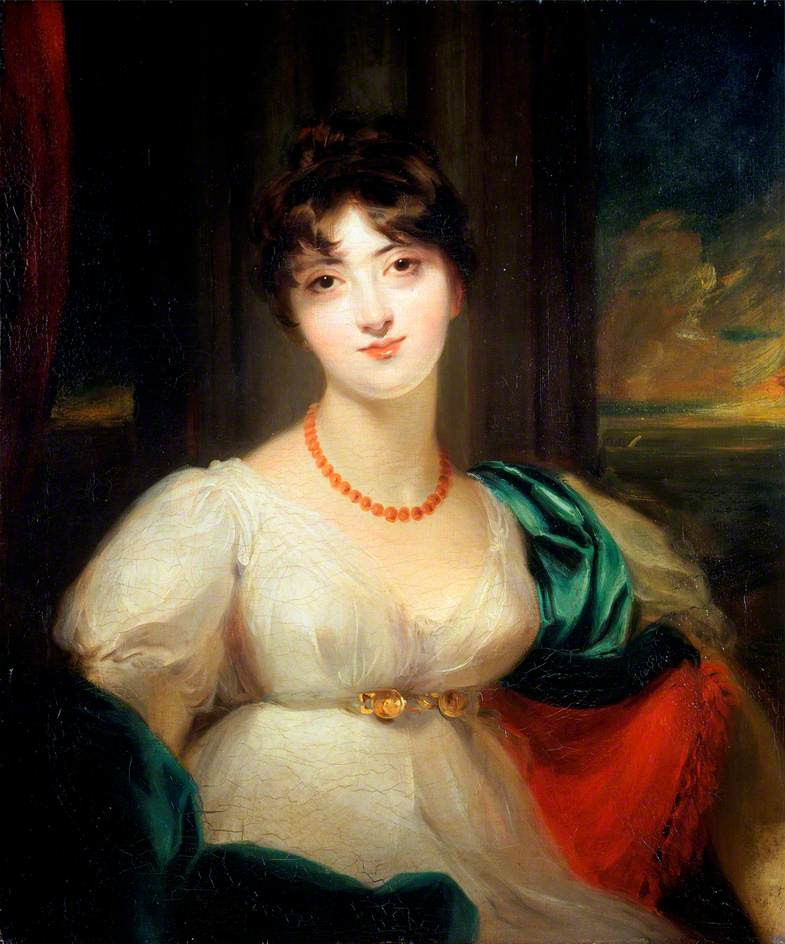
Art by Thomas Lawrence
2: Helena Puderzucker

While she was the toymaker's daughter and a Disney Princess-ish happy go lucky young belle, taking everything in stride and loved by every quirky dweller of her gingerbread fairytale mountain town, Helena Puderzucker took the adive to heart that with her inexhaustable energy and the smile of destiny on her face, she could do anything.

And she became a factory owner.

She bought mine after mine, forge after forge, and with cold, calculated bookkeeping skills, turned them into what Saruman would have wanted Isengard to be if he could afford it. Puderzucker Steel isn't a business that wants to be liked, it's not based on some novelty product or marketing wonder. It's an iron and steel monopoly. It should be clear how terrifying that is. These days Helena Puderzucker lives in a picturesque small castle on top of a mountain which takes an elevator to reach. What she gets up to there, the richest woman of the country and then some at the age of twenty-eight, is anyone's guess. But allegedly, she grows increasingly depressed as her frilly pastel tea parties grow more desperately garish and obscenely decadent. She is always the only person attending.

Market: Steel

Personal Aesthetic: Grand Budapest Hotel, Austrian and Viennoise pastry kitsch.

Notable Enemies: Amicable local blacksmiths who need to provide for ther kidnapping-prone daughters. Druids, fairies and animals living in the forests cut for the steel industry. Her many greedy male suitors after discovering she makes no pretenses about being gay. Her many greedy female suitors after discovering she won't marry any of them. Her regretful but jealous father. The brewing beginnings of a miner revolution. The ghosts of a LOT of miners.

Shady Secrets: Had two mine collapses covered up that killed over a thousand miners. An obsessive collection of rare cigar bands that she has destroyed the lives of innocent collectors over. A gratuitous blackberry pie fetish.

Art by Mortunn
3. Wu Hong (武弘)


Wu Hong only ever eats his own shark. That is, shark that was caught for him, specifically. To be served in his own restaurant, which has one table: the table for Wu Hong. Not that there’s anything wrong with the rest of the shark his company sells. In fact it’s the best shark you can buy. Because it’s the only shark you can buy. You better not go fish for shark, you hear?

Hammerhead sharks in truth not that rare in the sea where the Wu Fishing Company sails. They’re caught with nets and harpoons, and end up as filets and soups in porcelain bowls. Everyone with a bit of money wants to eat shark. It’s common enough that it's not too hard to catch, but rare enough that you can dress it up and sell it as a delicacy and make people seriously overpay. And Wu Hong has built a company on this.

Wu Hong doesn't even like shark that much. But Wu Hong has a lot of money. People want to be Wu Hong. So if Wu Hong eats shark, so will they.

Market: Hammerhead Shark Meat

Personal Aesthetic: Large displays of shark scrimshaw and ornamental weaponry, lacquered wood, excessive amounts of ornaments made from jade, pearl, malachite etc.

Notable Enemies: Impoverished fishing villages. The Imperial navy - in a poor state and exceedlingly worried about the Wu Company's fleet of "chaperones" allegedly built to protect its shipping vessels. He (荷) the Mermaid Queen of the White Sea. The infinitely less succesful Wu siblings. Death Emperor (死帝) the great black shark that bit off Wu's hand.

Shady Secrets: Murdered his own senile father while on a fishing trip to inherit his wealth before it was gambled up by the old man. Personally funds pirate bands to prey on independent fishermen. Cursed by the Mermaid Queen so that any woman he has a child with will birth dead fish instead,  because her son (a shark) was fished up and served to Wu by the company.


Art by Francisco de Zurbarán
4. Babi Suri

One of the most widespread drugs is a powder, yellowish and crystalline like sugar, that tastes like lemon-flavoured rock candy and is poured onto the tongue with a spoon or sometimes mingled into coffee or tea. It's called Citrus, and it's refined from the lemon-like fruit of one particular big tree. The name of this tree is Babi Suri. She (as that is what the tree calls herself despite being both male and female, which is how trees work) is sentient, sapient, more than two-thousand years old, and she is very rich.


When in the old times a gentle old woman came to pick lemons, she discovered that a taste of this odd fruit knocked her over the head with spaced out euphoria. Unfortunately for her, Babi Suri had noticed before how valuable that feeling was, since at night she was also a hotspot for mushroom dealers. So, having discovered her own marketable potential, Babi Suri made the decision that seemed most logical and agreeable to her. She ripped the woman's head off with a branch, then she sent locals to fetch her a chymist and developed with him the Citrus as it is known today. Then she ate him. Though "drank him" may be more appropriate.

Now she roots in a garden inside of a fortress manned by two-thousand swordsmen, and she's tended to by two-hundred nurses. Babi Suri wants for nothing. Except, well, more. More in general.

Market: Drugs


Personal Aesthetic: Ottoman and Turkish architecture, the first part of The Thief and the Cobbler, many black-turbaned guards.


Notable Enemies: The Sultan, who is seeing his people suffer in the grip of  Citrus but whose military forces are preoccupied. Almas Al-Amir, a narcotic gum trader from overseas whose drug empire is being decimated by the cheaper Citrus. The faithful who condemn such dehumanising substances. The spirit of the chymist, who escaped from Babi Suri in the form of a water vapour. Other magical plants filled with moral disgust and/or jealousy.


Shady Secrets: An addiction to a drug which is derived from the sap of desert cacti. Has to steal the fertility of other creatures, both male and female, so that she can bear bountiful fruit all year round. Has re-established the worship of a bloodthirsty old god, to keep the Sultan's army scattered dealing with its murderous zealots.


Art by Gustave Dore
5. Eustice Morel

Sometimes, it's not an ironclad monopoly or a hypersuccesful product you need. Morel & Krumpf Printing turns its monster profits because of Eustice Morel, and to Eustice Morel, 0.9999 and 1 are not even close to being the same thing. Every evening, Eustice Morel himself goes through all the paper bins to check whether they've all been filled on both sides. When you're using a charcoal or a pencil at Morel & Krumpf, you only get a new one when you turn in the stub that proves you've used it to its fullest extent. You're fired if break stops at half past and you show up to your desk at half past instead of already sitting behind it.

Though everybody hates Mister Morel, the pay is decent comparatively good (but objectively terrible). Morel pays just enough that compared to the other options, people will rather suffer his harsh regime for the extra dimes. It's all part of Morel's designs for Morel & Krumpf Printing, his life's work. No decimal goes unnoticed. Nothing is ever unaccounted for.

Well, except for Mister Krumpf. That's what everybody wonders. If it's called Morel & Krumpf printing, then who the hell is Mister Krumpf?

Market: Printing

Personal Aesthetic: Late Gothic and early Victorian, metalwork windows and gargoyles, austere and miserly interiors.

Notable Enemies: Notorious thief Ringworm Jack, whose favourite pastime is stealing single pennies from Morel's business and watching him go mad over it. The Inking House ever since Morel & Krumpf started using block printing for their illustrations instead. The budding socialist movement. Morel's disowned absynthe-fuelled daughter. The police, whom Morel dislikes on principle.

Shady Secrets: Has been consistently and calculatedly using loopholes in the law to avoid taxes. Blackmails the local undertaker to obtain a corpse every other week, to feed to Mister Krumpf. Mister Krumpf, a horrible man-sized human-bat creature that Morel keeps in a cupboard.


Art by Elle Michalka

6: Iova Blue

Anyone who has met Iova Blue in person may well be considered an expert in the dangerous symptoms of adderall and cocaine overuse. She's also a brightly luminescent Electric blue, skin hair and all, causes static shock when you touch her most of the time, talks like a sped up film and is always moving somewhere. She gets a nosebleed every once in a while and barely notices.

She's a  math wizard and designer, who develops supermathematical cerebromunculi and Abraxean semiholographigrams at the highest state of the arcane art. According to the young wizards and alchemists who have attended her pitches and TED-talks, Iova Blue is the closest you can come to enlightenment without your brain turning into liquid starfire and bursting out through your ass. A reckless genius with an infinite dream, a maverick and the one-person frontier of magic computing. 

Magic computing is developing quickly. Every wizard needs it these days. Every wizard needs Iova Blue. Iova Blue is hypnotic. Iova Blue is brilliant. Iova Blue stands in the vanta-white grainfields at night, tuning into the aria of the cosmic particles sleeting through the void aflame. Iova is Pinnacle. The New begins in Blue. 

Market: Magical Computing

Personal Aesthetic: Impossible contraptions, complex occult machinery alternated with modern glassy polygonal shapes. This track.

Notable Enemies: Elderly wizards who see nothing wrong with doing their computing according to the time-tested golem-with-abacus method. The Guild of Mathematicians, who have lost both the limelight and many employment options. Philosophers, watching with existential terror. ABRAXAS, THE PRIME FRACTAL, because he has had a well-outlined plan for the computer apocalypse and Iova Blue is starting to cause bits of it a small millenium ahead of schedule, throwing off all of his models and predictions. 

Shady Secrets: The machinal parts of the computers are manufactured under horribly dehumanising conditions by slave homunculi, the organic parts even worse. Sporadically emits bursts of highly carcinogenic radiation, much like burps: seventeen deaths and counting. Every once in a while the organic parts of a computer wake up to their nightmarish existence.